Gül
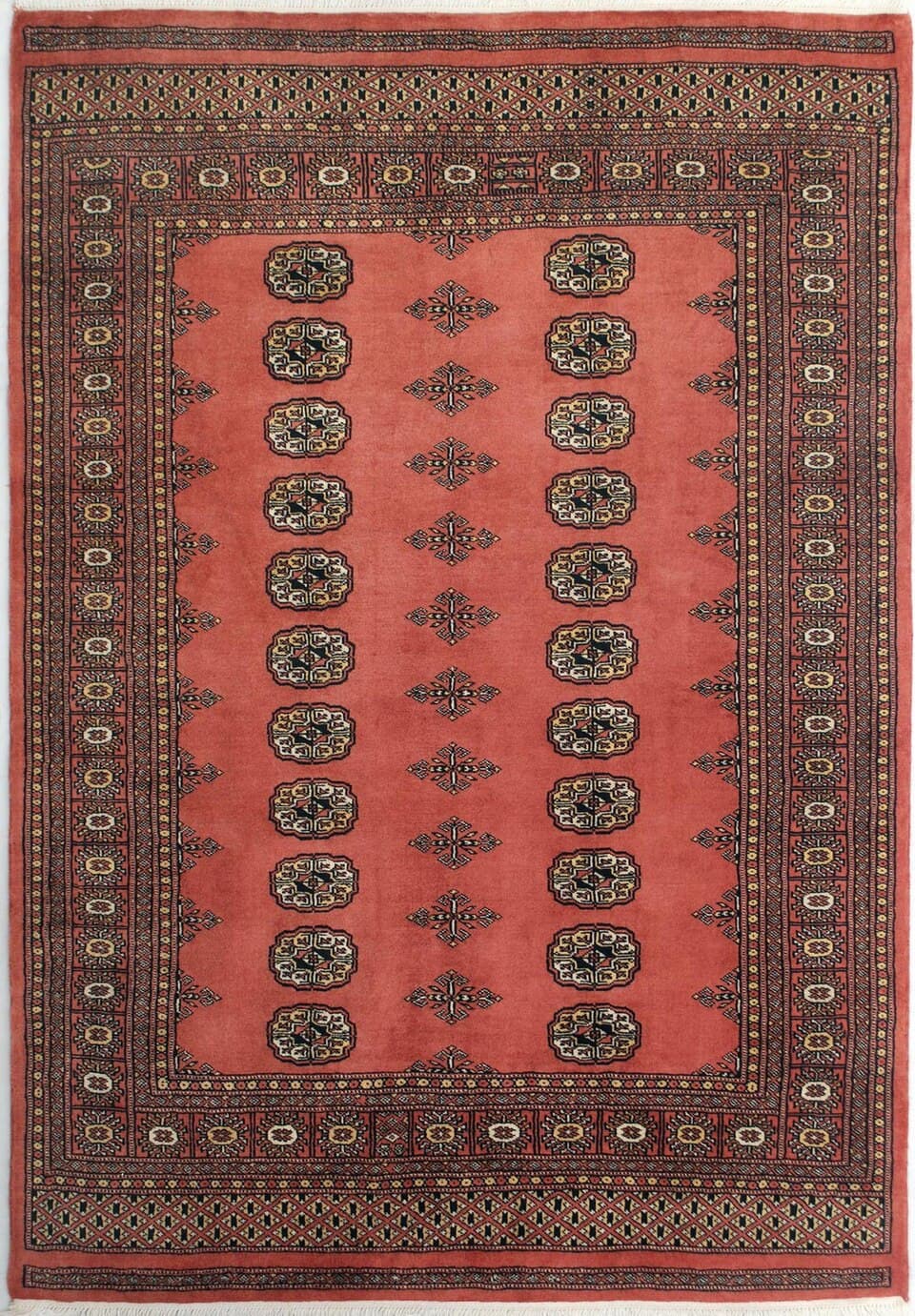
A repeated, roughly octagonal medallion that runs in rows across a Turkmen rug. The word means flower, but a gül is really a tribal emblem.
The word gül comes from the Persian gol, meaning flower, but a gül is not botanical. It is a tribal emblem, an heir to the tamga, the abstract seal that Eurasian nomads branded on livestock and stamped on flags to mark a clan.
Each Turkmen group carried its own gül, so a rug can almost be read back to its makers. The Tekke guarded a quartered gül as a strict trademark, while the Ersari, who took in other displaced tribes along the Amu Darya, never settled on one. Their güls, such as the Gülli gül carried over from the Salor, are larger and more open, a record of mixing rather than one bloodline.
Drawing a gül correctly is exacting work: it has to be perfectly symmetrical and stepped cleanly across a grid of knots, which is why a weaver's command of the motifs was tied to her standing in the community.